In his resignation from the Committee, it was as if Dunant could predict the turmoil which lay in his future. In 1867, the bank where Dunant served on the board of directors went bankrupt, causing Dunant to lose everything, as he took the fall for the failure of the institution.16 He lived the rest of his life in poverty.
In 1870, when war began between France and Prussia, he stepped back into the role of advocacy for the wounded, submitting suggestions to sovereigns for how to neutralize certain towns for care of the wounded, sending dispatches for ambulances, and introducing a system for more efficient identification of the dead.17 However, given the degradation of his reputation following the downfall of his business career, suspicion followed him with each move– dulling the effect of his work.
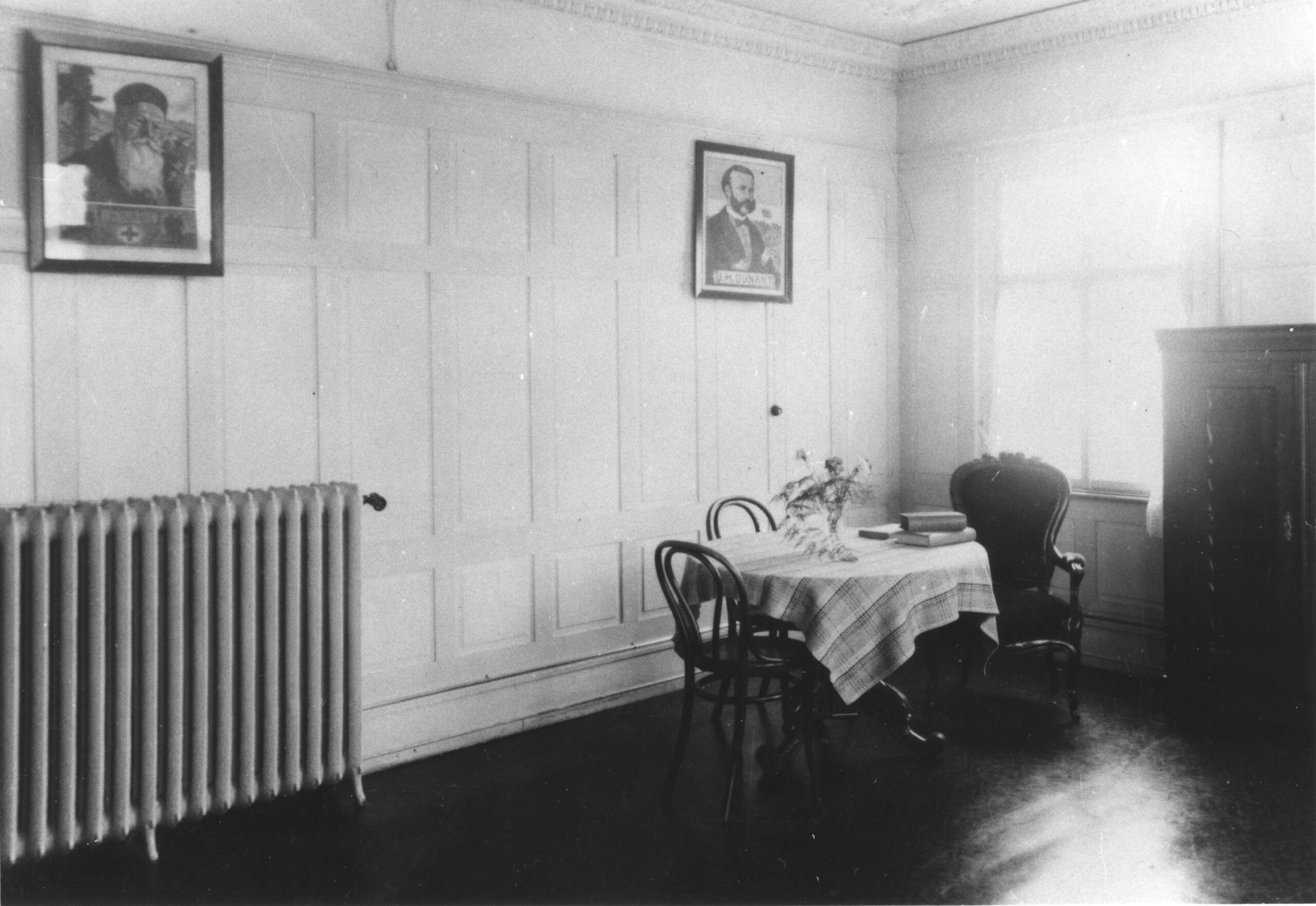
As the Geneva Conventions were revered across Europe as safeguards of humanitarianism, Dunant spent the rest of his years wandering France, Germany, and Italy, under a constant barrage of scrutiny and slander.18 He eventually settled, ill, at a hospice in Heiden, Switzerland, where for eighteen years he lived out a lonely and frugal existence.19 In an absurd twist of fate, a journalist published an article in 1895 which reintroduced the forgotten Dunant to the world, earning him the first Nobel Peace Prize in 1901.20 However, as one can assume, Dunant was not a man drawn to spectacle or fame. He donated all the Noble prize money to charity, living frugally until his death in October of 1910.21