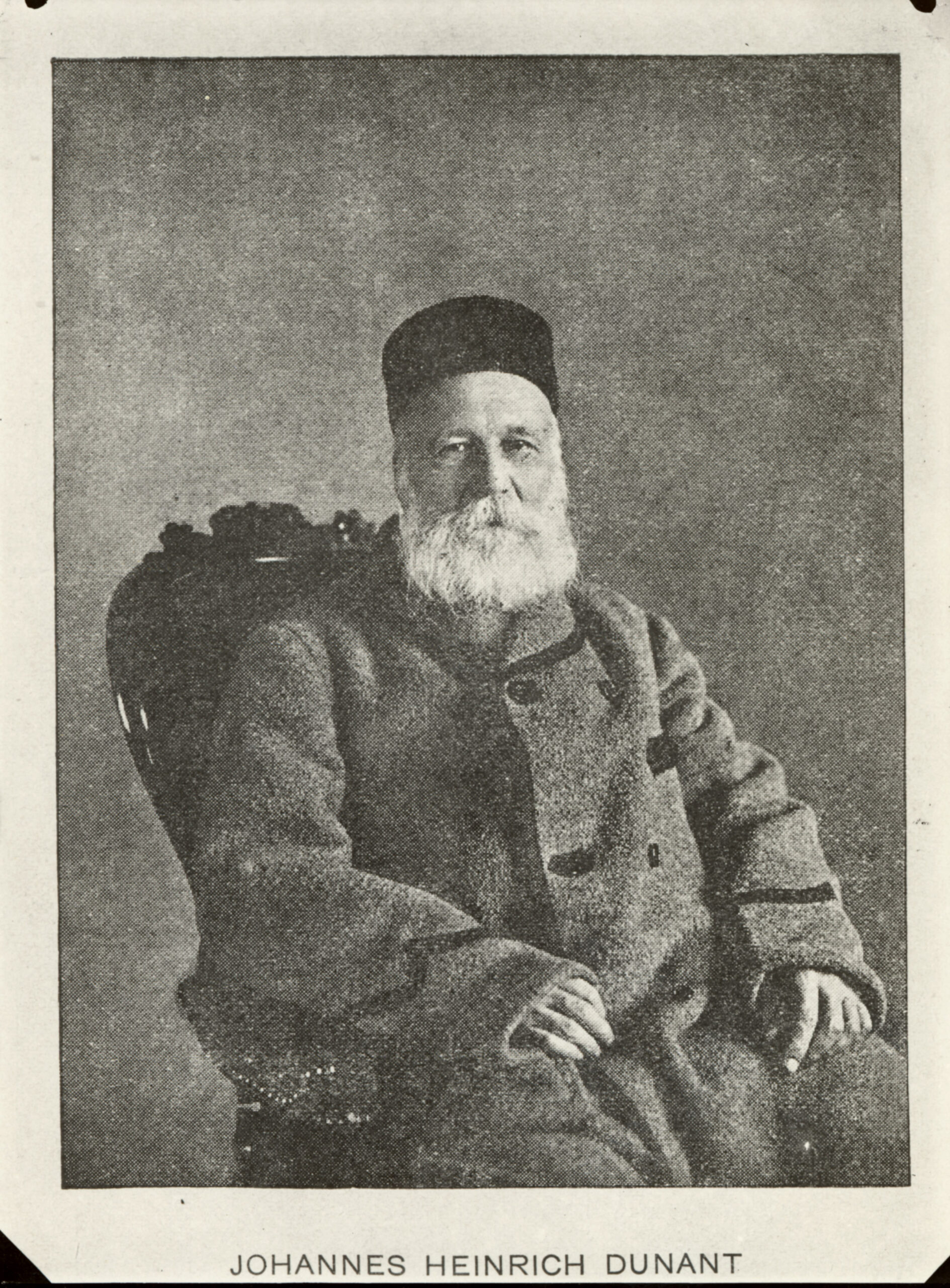
Henry Dunant’s legacy is one of inspiration, but his story is one of a complex man overcome by intense drive and humanitarian purpose in a world that often did not reciprocate the same principles. The footprint of his life’s work, in the Geneva Conventions and the Red Cross, remain into the present– though it cannot be said that Dunant’s vision, which Moynier encapsulated in his remark about the complete “[banishment of] old practices which centuries were barely able to discard,” has rung true yet. A member of the ICRC and biographer of Dunant, Pierre Boissier, stated, “It would not be correct to speak of [Dunant’s] death as an ending… Dunant’s action is every day repeated, in countless places, where men and women tend human beings in distress, caring not where they are from or under whom they serve, but only for the nature of their suffering.”22 However, we should take this history not as a story of complete optimism, or see the introduction Conventions as a cure-all for the devastation of armed conflict. We must remain conscious of the constant, blatant failures of nations to uphold the humanitarian values enshrined in Dunant’s life’s work. In thinking about and striving towards a just world, it is important to recognize the ways in which we fail to uphold frameworks intended to bring forth justice.
Henry Dunant should be honored in the collective memory of the world, but in that memory there must remain a continued purpose to strive toward the realization of humanitarian values where they continuously fail to be met– tutti fratelli.